
Change is often seen as an organisational effort. It involves moving structures, teams, systems, and strategies. Every change I’ve seen, whether in a global company, a government, or a small team, starts well before the organisation acts. It begins when leaders themselves shift. Not in their role, but in who they choose to be while leading others.
When we look closely at successful change, a simple truth emerges: organisations scale at the pace their leaders grow.Not faster. Actually, I mean never faster.
And yet, self-leadership is often the least talked about and at the same time one of the most overlooked parts of organisational change. Let me give you an example. For instance, we tend to focus on methodologies, maturity models, frameworks, and tools. But we rarely address the inner aspects of leadership. This includes personal clarity, emotional steadiness, and collective awareness. These elements decide whether change will happen or just remain an ambition.
This is why this article explores the principle behind lasting change. It highlights why personal growth is key to any successful change. And it will show what this means in practice. How leaders can learn the skills to guide systems, teams, and organisations for lasting success.
The illusion of outward leadership
Most of the time, traditional leadership focuses on the external aspects of the business. Think about things like the decisions we make, the messages we share, the updates we provide, the meetings we hold, and the results we achieve. Outward leadership has been the main story for years. It means leading by directing, informing, and coordinating the efforts of others.
But outward leadership is brittle. It breaks precisely at the moments when organisations need stability the most. We have seen this reflected clearly in the data collected over the last 18 months:
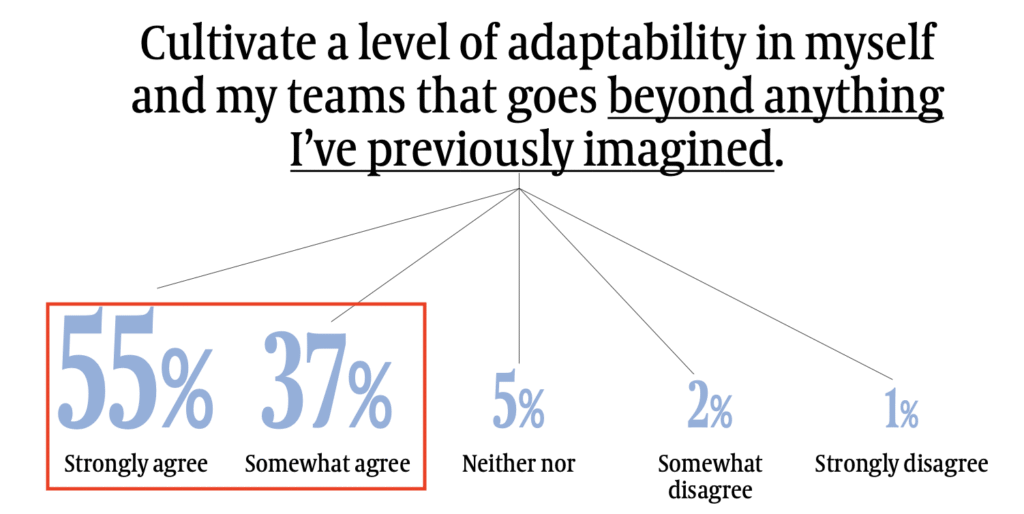
- 92% of CEOs say adaptability is now the number one leadership skill (Egon Zehnder Research, Oct 2025).
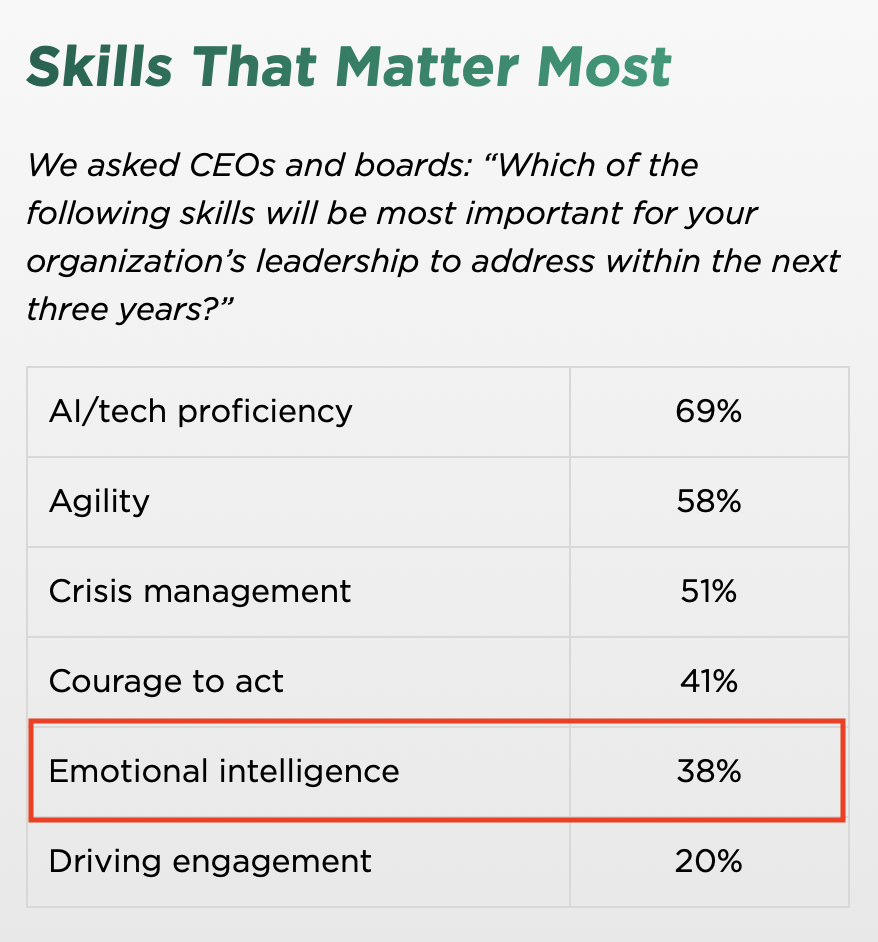
- Yet only 38% of CEOs show strong emotional intelligence, and only 20% are seen as capable of driving engagement (Korn Ferry, 2025).
- On top of that, nearly 79% of employees report low trust in change leadership (Gartner, 2025).
The gap is therefore unmistakable: leaders are being asked to lead differently yet are equipped to lead in the ways of yesterday.
Outward leadership makes assumptions. It assumes that clarity will be enough, that strategy will be enough, that messaging will be enough. But people do not follow announcements. They follow behaviour, tone, rhythm, and intention.
And this is where the illusion cracks. When the outside changes faster than the inside, leadership becomes reactive. When leaders feel stretched thin, they default to old patterns. And when pressure rises, behaviour reveals itself without mercy.
The organisations that move forward today are those where leaders turn the mirror inward first. Because self-leadership, not tools, frameworks, or policies, decides how high organisations can fly.
The three inner shifts (and why they matter more than ever)
It is good to know that self-leadership is not a personality attribute. It is more about the continuous, conscious practice of aligning who you are with how you lead. And it starts with three inner shifts that every leader must make if they want change to scale sustainably.
These shifts are not abstract. They are psychological, behavioural, and deeply practical, and yes, they can be trained.
- From Pressure to Clarity (Personal Intelligence).
This is the shift from noise to purpose. It is the moment a leader stops running on autopilot and reconnects with what they stand for. In a climate where 75% of workers plan to “job hug” for stability until 2027 (Pollfish, Oct 2025), clarity becomes a competitive advantage. And this doesn’t only go for individuals, but also for companies trying to mobilise their talent.
Leaders who have Personal Intelligence know what they optimise for. They make choices that align with purpose, not panic. They communicate from intention, not overwhelm. And they create teams that move with meaning, not fear. - From Reactivity to Emotional Steadiness (Emotional Intelligence)
In our age of technostress, disengagement grows not because of workload, but because people no longer feel connected to the “why” behind the change (Nicolas Behbahani, Weekly People Analytics Research #128).
Emotional steadiness is a leader’s ability to stay grounded when tension rises. This is not about being calm for the sake of appearance. It is about being a stable point in a shifting system, a psychological anchor that others can rely on.
Teams do not trust perfection. They trust leaders who hold steady when things get messy. - From Control to Collective Awareness (Collective Intelligence)
The future of work is no longer individual. It is interdependent. By 2030, 75% of all jobs will need to be redesigned, upskilled, or redeployed (McKinsey, 2025).
The organisations that thrive at that point in time will be those that can sense, adapt, and move together. Collective Intelligence is the shift from “my decision” to “our movement”. It is the ability to read the system, invite diverse perspectives, and align people without controlling them. Leaders with Collective Intelligence create teams that expect change rather than waiting for orders.
Together, these three shifts form the engine of self-leadership. They also form the heart of the PEC model I have developed over years of working in change:
- Personal
- Emotional
- Collective Intelligence.
PEC is not a theory. It is a leadership operating system for the age of adaptiveness.
Why self-leadership scales change
The data is clear: change does not scale because systems mature. It scales because people do. Gartner’s 2026 findings confirm that the fastest-moving organisations invest in human skills, not just technology. And SHRM’s research shows that every 1-point increase in HR maturity delivers $62K more revenue per employee. This is not a coincidence. When people grow, organisations grow.
Self-leadership matters because:
- Leaders set the emotional climate of the system.
- Leaders model the behaviours that create culture.
- Leaders translate complexity into meaning.
- Leaders hold the rhythm to which teams anchor themselves.
- Leaders carry purpose into places that strategy alone cannot reach.
Without self-leadership, change falters under its own ambition. Though when it comes with it, change becomes a collective movement instead of an instructional exercise. This brings us to one of the most powerful anchors I have ever worked with inside change projects: The 7 Change Principles.
The 7 Change Principles: What leaders must embody before they can scale change
It is good to understand that these principles are not steps. And they are also not a checklist you can tick-box. They are the laws of human movement during change. They apply no matter the method, maturity model, or framework an organisation uses.
Before a leader can scale change, they must learn to scale these seven principles within themselves:
- Purpose as the North Star
Self-guidance starts with a clear purpose. Why you lead is more important than how you lead. When purpose is embraced, decisions become simpler and communication becomes clearer. - Awareness Before Action
You cannot shift a system you cannot see. Leaders must be mindful of themselves, their impact, and their relationships. Awareness prevents reactivity – and reactivity is the enemy of adaptive change. - Trust as Operating Currency
Trust is not something that is earned through statements, but through consistency over time. Leaders who demonstrate self-assurance project reliability. Leaders who deplete trust stall transformation long before a project plan is written. - Rhythm Over Speed
Speed burns out teams. Rhythm aligns them. Leaders who understand rhythm create predictability, energy cycles, and momentum that scale across teams. - Conversation as Transformation
Transformation is not a broadcast. It is a dialogue. Leaders who practise open, intentional communication build safety and safety builds movement. - Flow Over Force
When teams move with clarity and autonomy, you do not push change forward – it flows forward. Leaders practising flow adapt constraints rather than tighten control. - People Before Process
We all understand that the process is important, but that it is the people who drive change. Leaders who focus on skills, emotional understanding, and teamwork help their organisations grow sustainably.
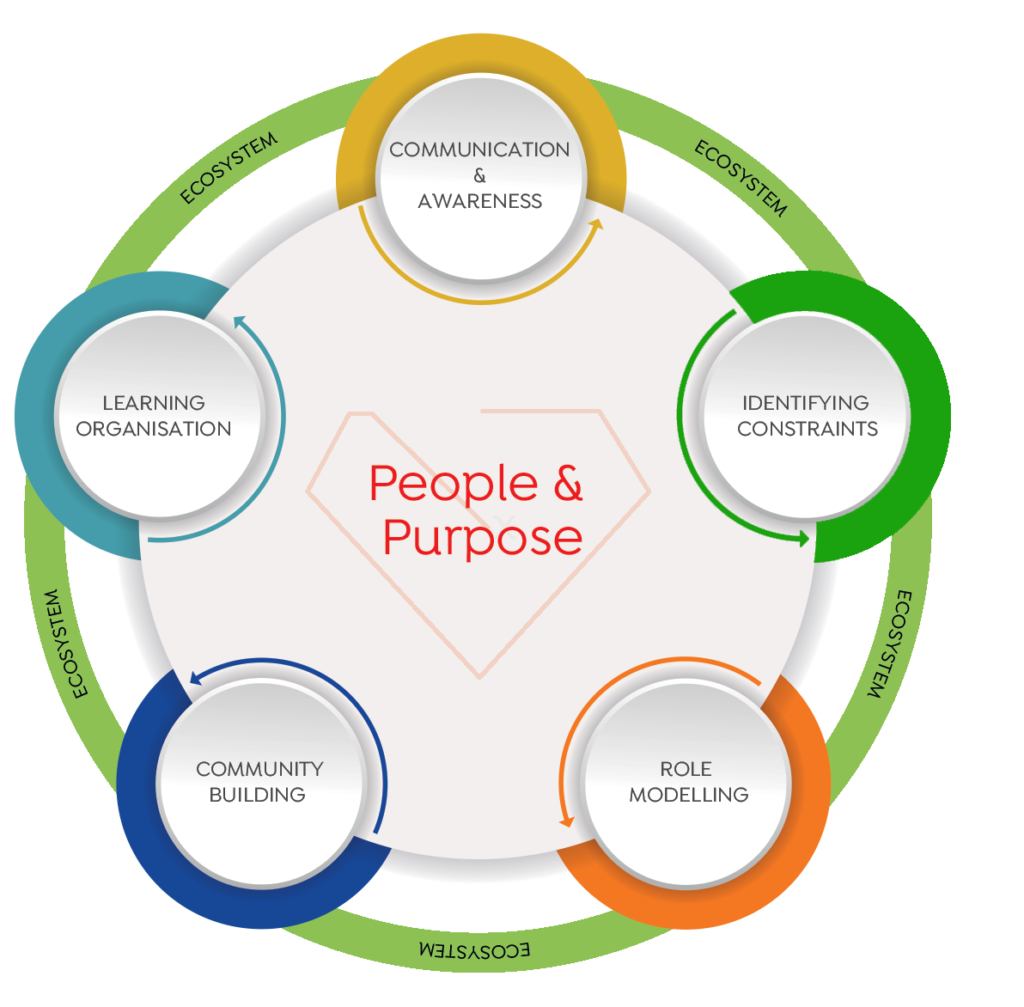
These principles are not external criteria. They are internal practices. Scaling them starts with the leader themselves, and only then can they become part of the wider organisational DNA.
What this means for organisations today
As we are entering an era where organisations must evolve faster than ever before, people require more meaning, emotional safety, and clarity than ever before. This conflict cannot be resolved through systems improvement alone.
AI, automation, workforce redesign, and hybrid environments are not just operational shifts. They are human shifts. And the leaders who succeed know that change is more about inner strength than technical skills.
Self-leadership is not the soft stuff. It is the structural strength that everything else rests on:
- When leaders grow, organisations find their rhythm.
- When leaders steady themselves, teams regain confidence.
- When leaders align with purpose, strategy becomes real.
- When leaders act collectively, change becomes shared momentum.
This is the work. And it starts within.
A Final Reflection: Growth Is the Most Scalable Strategy
When we talk about scaling change, we often jump to the organisational level. This includes governance, structures, operating models, and capability maps. After twenty years of helping leaders with complex changes, I’ve learned that you can’t just “roll out” scale.” Scale is something you grow into.
The truth is that organisations rarely lack frameworks. They lack leaders who are steady, clear, and connected enough to guide a transformation without holding it too tightly. Leaders who understand that people do not follow instructions; they follow energy. Leaders who show curiosity, emotional steadiness, and collective awareness do so naturally. This isn’t just a technique; it reflects who they are becoming.
This is where growth becomes strategic. Because when a leader grows, the system around them breathes differently. Meetings shift tone. Conflict softens. Decisions accelerate. The centre of gravity changes. Teams start mirroring a different rhythm. It is almost invisible at first, but unmistakable once it happens.
This is why scaling self-leadership is not a side note in change; it is the engine of it.
That is why I created the PEC model over time. It helps leaders build the inner skills needed in today’s organisations. PEC is not about being perfect. It is about being present, especially when the pressure rises. It is about widening the space between reaction and response, and leading from a deeper, more grounded place.
Leaders who practise PEC do not merely navigate change. They shape it.
This is also why we created the Role Model Programme through TwinxterAcademy. It’s not just training; it’s a place where leaders can practise these inner shifts in real time. It’s based on a simple idea: organisations don’t change just by having new structures. They transform when leaders show behaviours that others can trust and follow. Leaders who take this path attract followers not for their title, but for their presence, clarity, and rhythm. You can read more about the Role Model programme here.
Because in the end, leadership is not something you perform. It is something you become. And when leaders shift from performing leadership to practising it, their teams change. Their organisation changes. Their outcomes change. The scale they are chasing begins to emerge. And it’s not through force, but through flow.
Growth is the most scalable strategy. And scaling self-leadership is how meaningful change finally takes shape.

