
One of the things I have come to notice over the years is that some organisations can really look busy long before they become truly adaptive. I’ve noticed that the pressure they feel is real. Their markets shift. The technology they use accelerates. And the expectations of talent they onboard evolve. I also notice that leadership teams in those organisations are often asked to deliver results while, at the same time, they are asked to navigate the uncertainty they experience.
In response, many organisations do what feels logical. They launch more initiatives, introduce new frameworks, invest in tools, and start change efforts. On the surface, that can look like movement or even the start of flow in such an organisation. But, is that organisation really becoming more adaptive, or is it simply becoming more active? Obviously, there is a big difference between the two.
And believe me that that distinction matters more than most people realise. Activity can create the feeling of progress for a while. More meetings, more plans, more interventions, more energy. It might even give you the feeling of Yes, we’re doing it!
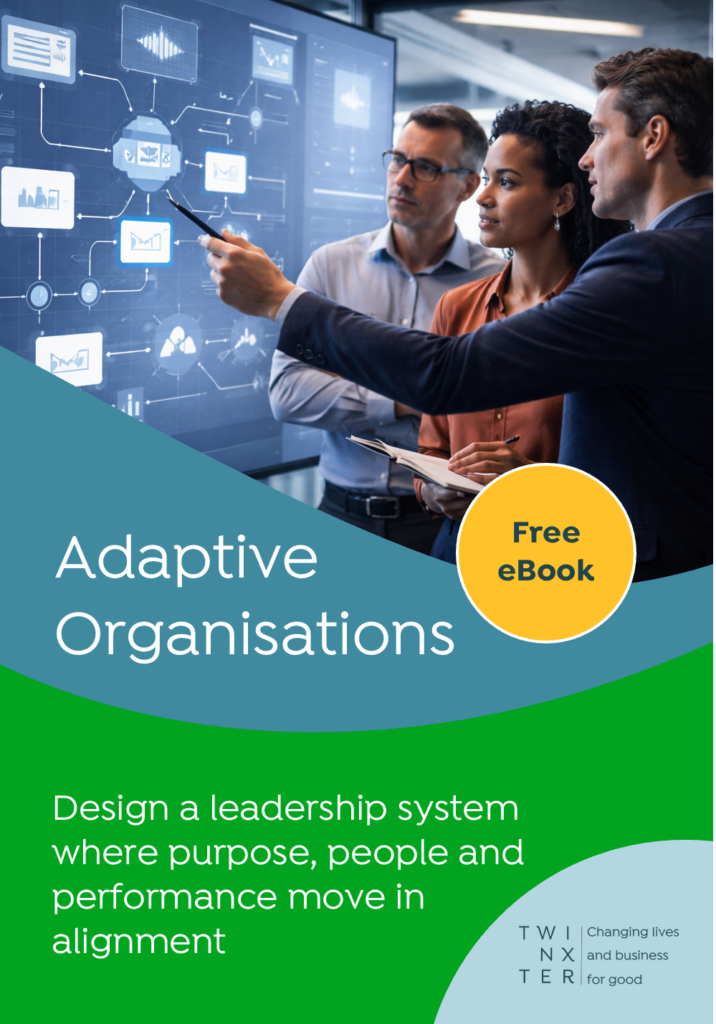
But if you look closer at their organisational system, you’ll see that much of it is still unclear, disconnected, or overloaded. All that extra movement can still leave people feeling as though they are working harder without becoming much more aligned. That is exactly why I created this new eBook, Adaptive Organisations.
I did not create this as yet another model to be dumped into every growing ocean of models and be admired from afar. Nor did I want it to be another checklist to tick off one component at a time. I created it because I wanted to capture something I keep experiencing in practice. Adaptability is still so much misunderstood in many organisations. It is often confused with speed, flexibility, or constant change. But adaptive organisations are not simply the ones that move fastest. They are the ones who remain clear about what matters, yet adapt their approach when reality demands a change.
That is a very different ambition. It means the real question is not only whether your organisation can respond quickly. It is whether it can stay aligned, responsive, and human while doing so. And that is exactly the question this eBook is about.
Why I felt this eBook was needed
One of the reasons I wanted to put this eBook together is that I see too many organisations trying to solve adaptive challenges with isolated interventions. One team works on strategy. Another focuses on leadership. A third improves governance. A fourth launches a communication track. Each of those efforts may be valuable in its own right. But your organisation will still encounter friction because the underlying parts aren’t working together as a system just yet.
That is also why this eBook opens with a broader invitation. It asks you as a reader to view adaptability not as something you roll out, but as a capability you build with intention. It points directly to your underlying system. It highlights how direction is set, how decisions are made, how people learn, and how leadership manifests in complex environments. Those are often the key differences between an organisation that keeps reacting and one that begins to move more coherently.
I also wanted this eBook to be practical, but not simplistic. An eBook ideal for leadership teams, transformation leads, HR, and change agents to spot patterns in their own organisation right away.
What is in it for me?
At the heart of this eBook sits a simple but powerful idea. Adaptive organisations do not emerge from one model, one intervention, or one improvement effort. They emerge from a set of connected capabilities that reinforce one another. Strengthen one part in isolation and you may see some progress. Strengthen your system with intention, and you begin to create something more resilient and responsive.
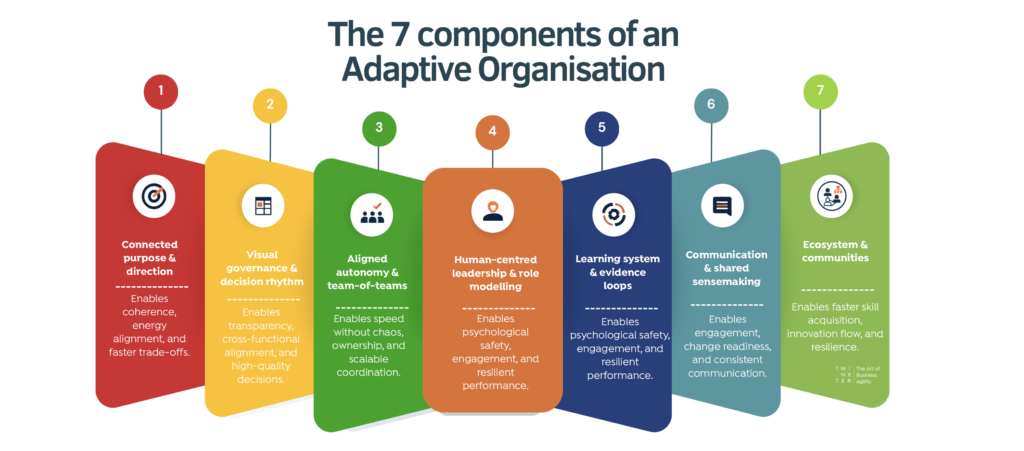
That is why this eBook introduces seven core characteristics of adaptive organisations:
- Connected purpose and direction
- Visual governance and decision rhythm
- Aligned autonomy and team of teams
- Human-centred leadership and role modeling
- Learning system and evidence loops
- Communication and shared sense-making
- Ecosystem and communities
That overview already tells the reader something important. Adaptability is not one capability. It is the result of several connected capabilities working together.
What I also like about this eBook is that it makes a strong point early on in the conversation. And that is that adaptive organisations are not faster at everything; they are clearer about what matters. This shifts the focus from speed to clarity, coherence, and meaningful responses.
Not another framework
What I hope you will find especially useful is that this eBook does not stop at just naming the seven parts. Each section turns the characteristic into a practical leadership and organisational dialogue.
Take Connected Purpose and Direction. This section encourages you to envision the organisation five years ahead. It focuses on redefining identity before strategy. You’ll translate purpose into clear priorities and keep it alive through stories, rituals, and regular reviews. It asks a very practical question too:can every role answer how its work contributes to purpose?
Then there is Visual Governance and Decision Rhythm. This focuses on making strategy clear and actionable. It clarifies who owns what and builds a steady decision-making rhythm. It also uses shared visual spaces like an Obeya to show priorities, blockers, OKRs, risks, and lessons together in one place.
The section on Aligned Autonomy and Team of Teams adds another important layer. It shows that autonomy thrives when teams operate within clear guardrails. They need clear decision areas, visible dependencies, and enough trust to act without always asking for permission. That makes autonomy feel less like fragmentation and more like coordinated movement.
For those familiar with my work, it will not come as a surprise that this eBook also keeps the human side central. The Human-Centred Leadership section focuses on personal clarity, emotional consistency, trust, and behaviour that others can use as a role-model. The Learning Organisation section views learning as a rhythm rather than an event. It’s woven into daily work through reflection, evidence loops, and small improvement cycles. The Communication and Shared Sensemaking part shows that communication isn’t just about sending messages. It’s also about helping people understand their work together.
Finally, Ecosystem and Communities expands the view beyond the formal structure. It encourages you to view your organisation as a network of relationships, flows, signals, and communities. It also urges you to enhance spaces for learning across boundaries, connect around common goals, and respond quickly through improved connections.
That is why I believe that the practical applications are what make this eBook feel useful rather than theoretical.
A sense of relief
I don’t want you to read this eBook and feel overwhelmed by another grand transformation agenda. The aim is to make you feel a kind of relief. Relief because you can suddenly see your organisation more clearly. Relief because the patterns start making sense. And relief because this eBook does not insist that everything must change at once.
In fact, the closing pages make a solid point clear. Adaptive organisations are not built overnight. Real organisational adaptability is a multi-year journey. It is shaped through cycles of learning, experimentation, and adjustment. What distinguishes those that succeed is not speed, but persistence. They see adaptability as a long-term capability for their organisation, not just a one-time change.
Why it is worth your time
If you’re leading in a complex, high-pressure setting and want to make your organisation more adaptive, this eBook is definitely worth your time. It helps you reflect clearly without losing focus. And it also gives you a way to share a common language during stressful times that many feel but struggle to express clearly.
You will discover a more systemic view of your organisation. It provides practical prompts for each of the seven components. You will also find a clearer method to identify existing strengths as well as where friction is slowing progress.
If I strip it back, I think the value is this. It gives you:
- Shared language during high-pressure settings you may already feel
- Practical way to view your organisation more systematically
- Prompts to spot where friction is blocking progress
- Clear sense of where to start without trying to change everything at once
Where to go next
So yes, this newsletter is an invitation to download my new eBook. Not just because it is free, but because I genuinely believe it will help you look at your organisation with more clarity, more courage, and more perspective.
Through this link you can download the eBook. I hope you enjoy it.
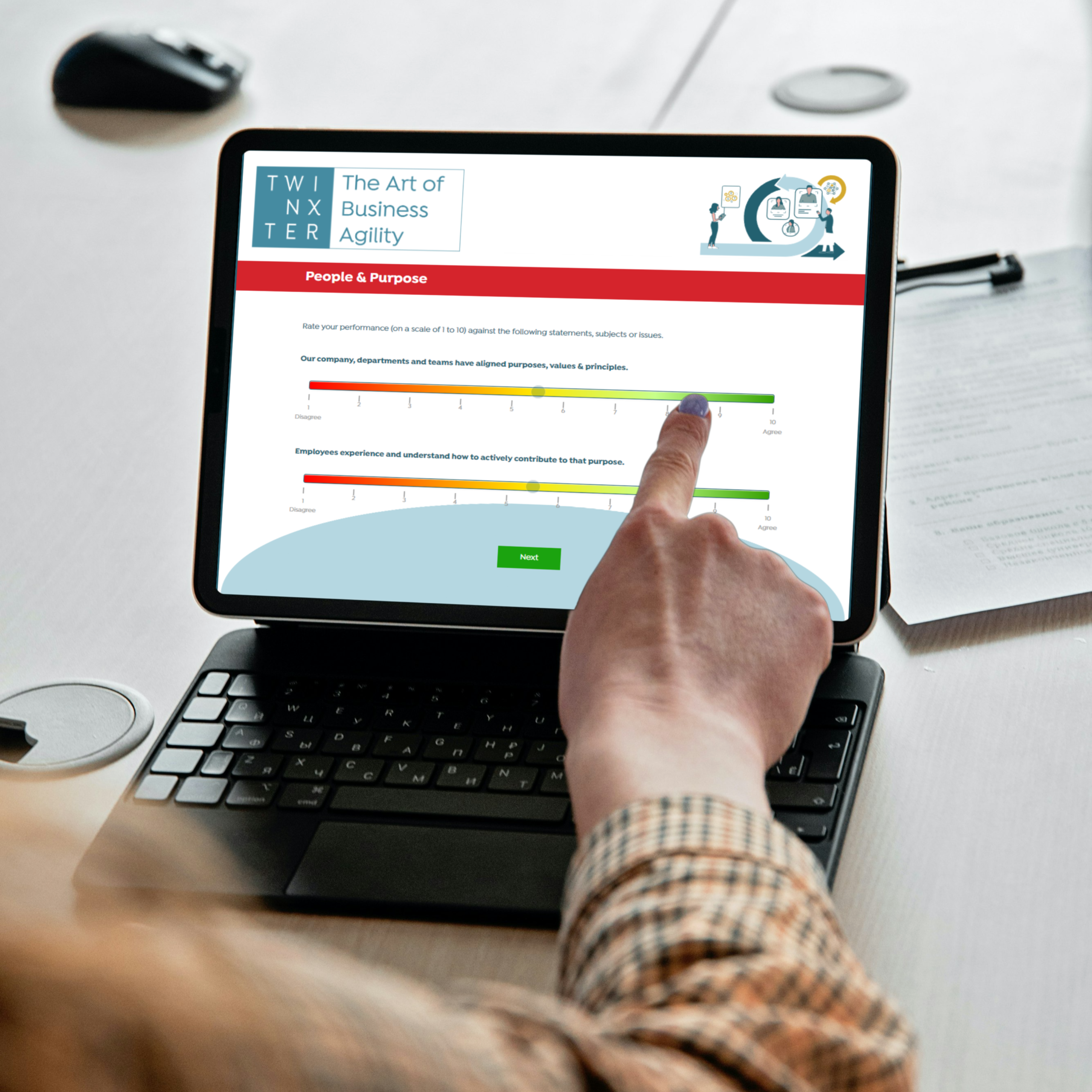
And if, after reading all of this, you may want to better understand your organisation’s most urgent issues. Then check out the Free Agility Quick Scan mentioned in the eBook or click here to go there directly. This scan helps you identify strengths, blind spots, and priority areas across the seven characteristics. You can then shift from just noticing to taking focused action with confidence. It may not give you all the answers in one go. But it will help you ask much better questions, and that is often where meaningful movement begins.
If these insights have helped you see your organisation more clearly, and you want to explore what that could mean in practice, let’s have that conversation. Book a 30-minute call for an honest exchange about where leadership is working well, and where your design may be getting in the way.
Book your complementary call here https://www.twinxter.com/contact/

